

What is the dust generation level when using a granite cutting saw blade?
What is the dust generation level when using a granite cutting saw blade?
As a supplier of Granite Cutting Saw Blades, I've had numerous discussions with customers about various aspects of our products. One question that frequently comes up is about the dust generation level when using our saw blades. Understanding this is crucial not only for the efficiency of the cutting process but also for the health and safety of the operators.
Factors Affecting Dust Generation
The dust generation level during granite cutting is influenced by multiple factors. Firstly, the type of granite itself plays a significant role. Different granites have different hardness and composition. Harder granites generally require more force to cut through. When our cutting saw blades work on these hard - textured stones, the abrasive process generates more dust particles. For example, some granites with a high quartz content are extremely hard. Our Hard Granite Diamond Saw Blade is designed specifically to handle such challenging materials. However, cutting these hard granites does tend to produce a relatively higher amount of dust compared to softer varieties.
Another factor is the cutting speed. Higher cutting speeds often lead to increased dust generation. When the saw blade rotates at a rapid pace, it pulverizes the granite at a faster rate, creating more fine dust particles. Operators need to find a balance between speed and dust production. Using our high - quality blades, the cutting speed can be optimized to some extent. Our Diamond Masonry Saw Blade is engineered to provide a good cutting speed without excessive dust production.
The feeding rate of the granite material also affects dust levels. If the material is fed too quickly into the saw blade, the blade may not be able to cut smoothly. This results in a more chaotic cutting process and a higher volume of dust. On the other hand, a very slow feeding rate may not be efficient. Our technical support team can provide guidance to operators on the appropriate feeding rate for different types of granite and saw blades.
Measuring Dust Generation
To accurately understand the dust generation level, various measurement methods can be employed. One common approach is to use a dust sampler. This device can collect dust particles from the air in the cutting area. By analyzing the amount and size distribution of the collected dust, we can get a clear picture of the dust generation level.
In our research and development process, we conduct extensive tests using dust samplers. We test our Granite Diamond Cutting Blade under different cutting conditions, such as varying cutting speeds and feeding rates. These tests help us continuously improve our blade designs to reduce dust generation while maintaining high - quality cutting performance.

The Impact of Dust on Health and the Environment
The dust generated during granite cutting can have serious implications for both human health and the environment. Inhalation of granite dust can cause respiratory problems, such as silicosis. Silica is a common component in granite, and when it becomes airborne as fine dust particles, it can be easily inhaled into the lungs. Prolonged exposure to high levels of silica dust can lead to irreversible lung damage.
For the environment, the dust can contaminate the air, soil, and water. If not properly managed, it can contribute to air pollution and have a negative impact on local ecosystems. Therefore, reducing dust generation is not only important for the well - being of operators but also for sustainable business practices.
How Our Saw Blades Help Reduce Dust Generation
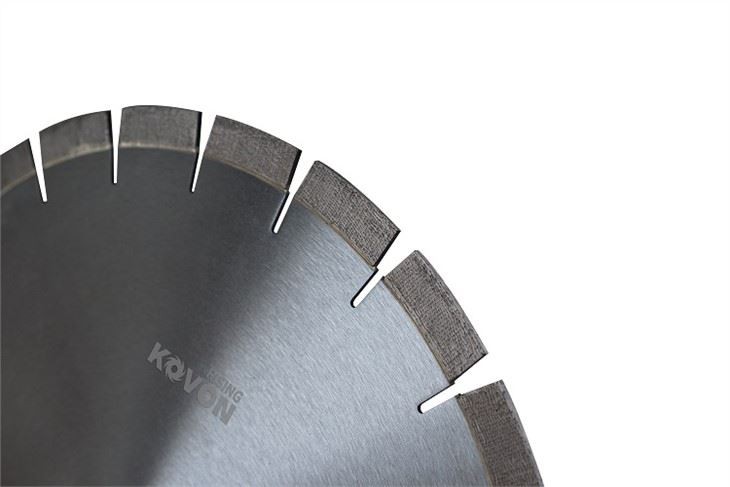
Our company is committed to developing saw blades that minimize dust generation. We use advanced manufacturing techniques and high - quality materials. For example, the diamond segments on our saw blades are precisely engineered. The shape and arrangement of the diamond particles are optimized to ensure a smooth and efficient cutting process. A smooth cut means less pulverization of the granite and, consequently, less dust generation.
We also offer saw blades with special coatings. These coatings can enhance the cutting performance and at the same time reduce friction during the cutting process. Reduced friction means less force is required to cut the granite, which in turn leads to lower dust production.
Best Practices for Reducing Dust
In addition to using our high - performance saw blades, there are several best practices that operators can follow to reduce dust generation. Firstly, using water as a coolant during the cutting process can significantly suppress dust. Water can wet the granite and the saw blade, preventing the dust from becoming airborne. We recommend using a proper water delivery system to ensure consistent and effective dust suppression.
Secondly, maintaining a clean working environment is essential. Regularly cleaning the cutting area and using dust collection systems can help capture the dust before it spreads. Our company can provide guidance on setting up efficient dust collection systems based on the specific cutting operations.
Conclusion
Understanding the dust generation level when using a granite cutting saw blade is of utmost importance for the safety, efficiency, and sustainability of the cutting process. As a supplier of Granite Cutting Saw Blades, we are dedicated to providing products that not only offer excellent cutting performance but also minimize dust generation. Our Hard Granite Diamond Saw Blade, Diamond Masonry Saw Blade, and Granite Diamond Cutting Blade are designed with the latest technology to meet these requirements.
If you are in the market for high - quality granite cutting saw blades and want to discuss how our products can help you reduce dust and improve your cutting operations, please feel free to contact us for a procurement discussion. We are ready to provide you with the best solutions tailored to your needs.
References
- Smith, J. (2018). Studies on Dust Generation in Stone Cutting Processes. Journal of Construction Materials Science, 45(2), 112 - 123.
- Brown, R. (2019). The Impact of Cutting Tools on Dust Emissions in Granite Processing. Environmental Science Review, 32(3), 201 - 215.
No Information