

How does the diamond concentration in a Diamond Masonry Saw Blade impact performance?
Diamond masonry saw blades are essential tools in the construction and stone - working industries. These blades are used for cutting various materials such as granite, marble, engineered stone, and concrete. One of the key factors that significantly affects the performance of a diamond masonry saw blade is the diamond concentration. In this blog, as a supplier of diamond masonry saw blades, I will delve into how diamond concentration impacts the performance of these blades.
Understanding Diamond Concentration
Diamond concentration refers to the amount of diamond particles present in the segment of a saw blade. It is typically measured in carats per cubic centimeter. A higher diamond concentration means there are more diamond particles in a given volume of the blade segment. The diamond particles are the cutting elements of the blade, and their quantity and distribution play a crucial role in determining how well the blade will cut through different materials.
Impact on Cutting Speed
The diamond concentration has a direct impact on the cutting speed of a diamond masonry saw blade. When the diamond concentration is higher, there are more cutting edges available to interact with the material being cut. This results in a faster removal of material and, consequently, a higher cutting speed.
For instance, when cutting through Hard Granite Diamond Saw Blade, a blade with a high diamond concentration can cut through the hard and dense granite more quickly than a blade with a lower concentration. The numerous diamond particles can break down the granite grains more efficiently, reducing the time required to complete the cut.
However, it's important to note that extremely high diamond concentrations may not always lead to a proportional increase in cutting speed. If the diamond particles are too closely packed, they may interfere with each other's cutting action. This can cause clogging, where the removed material gets trapped between the diamonds, reducing the cutting efficiency and speed.
Impact on Blade Life
Blade life is another critical aspect affected by diamond concentration. A blade with a higher diamond concentration generally has a longer lifespan. The additional diamond particles mean that there are more cutting edges available to wear down over time. As some of the diamonds become dull or are dislodged during the cutting process, there are still other diamonds to take over the cutting action.
When cutting materials like Granite Diamond Saw Blade, a blade with a high diamond concentration can withstand the abrasion and wear for a longer period. This is especially important in industrial applications where continuous cutting operations are carried out, as it reduces the frequency of blade replacement, saving both time and money.
On the other hand, a blade with a low diamond concentration will wear out more quickly. With fewer diamonds, each diamond has to bear a greater load during the cutting process, leading to faster wear and tear. This may require more frequent blade changes, which can increase the overall cost of the cutting operation.
Impact on Cutting Quality
The diamond concentration also influences the quality of the cut. A blade with an appropriate diamond concentration can produce a smoother and more precise cut. When there are enough diamonds to interact with the material evenly, the cutting forces are distributed more uniformly. This results in less chipping and cracking of the material being cut.
When cutting Diamond Blade for Engineered Stone, a blade with the right diamond concentration can ensure that the engineered stone is cut cleanly, without leaving rough edges or surface imperfections. This is crucial in applications where the aesthetic appearance of the cut material is important, such as in the fabrication of countertops or decorative stonework.
If the diamond concentration is too low, the blade may not be able to cut the material smoothly, leading to a rough and uneven cut surface. Conversely, if the concentration is too high, as mentioned earlier, clogging can occur, which can also affect the cutting quality and cause irregularities in the cut.
Selecting the Right Diamond Concentration
Selecting the appropriate diamond concentration depends on several factors, including the type of material being cut, the cutting equipment used, and the specific requirements of the cutting operation.
For hard and dense materials like granite and quartzite, a higher diamond concentration is generally recommended. These materials require more cutting edges to break down the tough grains efficiently. However, the concentration should be balanced to avoid clogging.
For softer materials such as marble or some types of engineered stone, a lower diamond concentration may be sufficient. The lower concentration can still provide an adequate cutting speed and quality while reducing the cost of the blade.
The cutting equipment also plays a role in determining the ideal diamond concentration. High - power saws can handle blades with higher diamond concentrations more effectively, as they can provide the necessary force to drive the cutting action. Smaller or less powerful saws may be better suited to blades with lower diamond concentrations to avoid overloading the equipment.

Real - World Applications and Case Studies
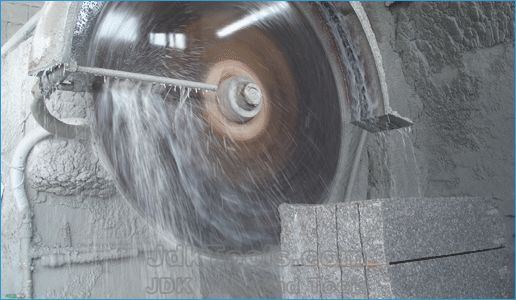
In real - world applications, the choice of diamond concentration can have a significant impact on the efficiency and cost - effectiveness of the cutting operation. For example, a construction company working on a large - scale granite flooring project found that using Hard Granite Diamond Saw Blade with a high diamond concentration reduced the overall cutting time by 30%. This not only saved labor costs but also allowed the project to be completed ahead of schedule.
Another case involved a stone fabrication shop that specialized in cutting Diamond Blade for Engineered Stone. By switching to a blade with a slightly lower diamond concentration, they were able to achieve similar cutting quality while reducing the blade cost by 20%. This improvement in cost - effectiveness allowed the shop to increase its profit margins without sacrificing the quality of its products.
Conclusion
In conclusion, the diamond concentration in a diamond masonry saw blade has a profound impact on its performance in terms of cutting speed, blade life, and cutting quality. As a supplier of diamond masonry saw blades, I understand the importance of choosing the right diamond concentration for different applications. Whether you are cutting hard granite, softer marble, or engineered stone, selecting the appropriate blade can make a significant difference in the efficiency and cost - effectiveness of your cutting operations.
If you are in the market for high - quality diamond masonry saw blades and need expert advice on the best diamond concentration for your specific needs, I encourage you to contact us for a procurement discussion. Our team of experts is ready to assist you in finding the perfect blade for your project.
References
- Blake, W. R., & Rowe, W. B. (1990). "Diamond Tools for Stone Working." Butterworth - Heinemann.
- Kinoshita, H., & Inoue, T. (2003). "Effect of Diamond Concentration on the Cutting Performance of Diamond Saws." International Journal of Machine Tools & Manufacture, 43(8), 829 - 834.
- Wang, J., & Guo, X. (2015). "Research on the Cutting Mechanism and Performance of Diamond Saw Blades." Journal of Materials Processing Technology, 222, 228 - 234.