

How does the grit size of a diamond saw blade affect granite cutting?
As a seasoned supplier of Diamond Saw Blades For Granite, I've witnessed firsthand the critical role that grit size plays in the granite cutting process. In this blog, I'll delve into how the grit size of a diamond saw blade affects granite cutting, sharing insights based on years of industry experience and scientific understanding.
Understanding Grit Size
Grit size refers to the size of the abrasive particles on the diamond saw blade. It is typically measured in terms of the number of particles per linear inch. A higher grit number indicates smaller abrasive particles, while a lower grit number means larger particles. For example, a 40 - grit blade has larger diamonds compared to a 200 - grit blade.
Impact on Cutting Speed
One of the most significant ways grit size affects granite cutting is the cutting speed. Blades with larger grit sizes (lower grit numbers) generally offer faster cutting speeds. The larger diamonds on these blades can remove more material with each pass. When cutting granite, especially thick slabs or large blocks, a lower - grit blade can quickly break through the hard surface. For instance, a Block Cutting Saw Blade for Granite with a grit size of around 30 - 60 is often used for initial rough cutting of large granite blocks. The large diamonds can chip away at the granite in substantial chunks, reducing the time required to make a cut.
On the other hand, blades with smaller grit sizes (higher grit numbers) cut more slowly. The smaller diamonds make finer cuts and are better suited for finishing operations. They remove material in smaller increments, which is necessary when a high - quality surface finish is required. For example, when creating a smooth edge on a granite countertop, a higher - grit blade might be used in the final stages of the cutting process.
Surface Finish Quality
The grit size of the diamond saw blade also has a direct impact on the surface finish of the cut granite. Lower - grit blades leave a rougher surface finish. The large diamonds create deep scratches and grooves on the granite surface as they cut through it. This rough finish is suitable for applications where the surface will be further processed, such as in the production of granite tiles that will undergo additional polishing steps.
In contrast, higher - grit blades produce a smoother surface finish. The smaller diamonds make finer cuts, resulting in a surface with fewer visible scratches and a more polished appearance. For applications where the cut surface will be the final exposed surface, such as in high - end granite countertops, a Hard Granite Diamond Saw Blade with a high grit size (e.g., 150 - 300) is often preferred.
Blade Wear and Durability
Grit size can influence the wear and durability of the diamond saw blade. Blades with larger grit sizes tend to wear out more quickly when cutting granite. The large diamonds are more likely to be dislodged or broken during the cutting process, especially when encountering hard inclusions in the granite. This is because the large diamonds are subjected to greater forces as they remove large chunks of material.
Conversely, blades with smaller grit sizes generally have better durability. The smaller diamonds are more firmly held in the blade matrix and are less likely to be dislodged. They are also less prone to breakage because they are removing material in smaller increments. However, higher - grit blades may require more frequent dressing to maintain their cutting efficiency, as the small diamonds can become clogged with granite dust more easily.
Chip Formation and Dust Generation
The grit size of the diamond saw blade affects the way chips are formed and the amount of dust generated during granite cutting. Lower - grit blades produce larger chips. The large diamonds break the granite into relatively large pieces, which are easier to remove from the cutting area. However, these large chips can also cause more wear on the blade and the cutting equipment.
Higher - grit blades generate smaller chips and more dust. The smaller diamonds break the granite into finer particles, which can be more difficult to manage. The dust generated by high - grit blades can pose health risks to operators if proper dust collection systems are not in place. Additionally, the fine dust can clog the pores of the blade, reducing its cutting efficiency.
Choosing the Right Grit Size
Selecting the appropriate grit size for a granite cutting job depends on several factors. The type of granite being cut is a crucial consideration. Harder granites may require a blade with a higher concentration of diamonds and a specific grit size to ensure efficient cutting. For example, very hard granites might be better cut with a Diamond Masonry Saw Blade with a medium - grit size (around 80 - 120) to balance cutting speed and blade wear.
The desired surface finish is another important factor. If a rough cut is acceptable and the surface will be further processed, a lower - grit blade can be used. For a smooth, polished finish, a higher - grit blade is necessary. The thickness of the granite and the cutting equipment available also play a role in grit size selection. Thicker granite slabs may require a lower - grit blade for faster cutting, while thinner slabs can be cut with a higher - grit blade for a better finish.
Conclusion
In conclusion, the grit size of a diamond saw blade has a profound impact on granite cutting. It affects cutting speed, surface finish quality, blade wear and durability, chip formation, and dust generation. As a supplier of Diamond Saw Blades For Granite, I understand the importance of choosing the right grit size for each specific application. Whether you're involved in large - scale granite block cutting or precision countertop fabrication, selecting the appropriate grit size can significantly improve the efficiency and quality of your cutting operations.
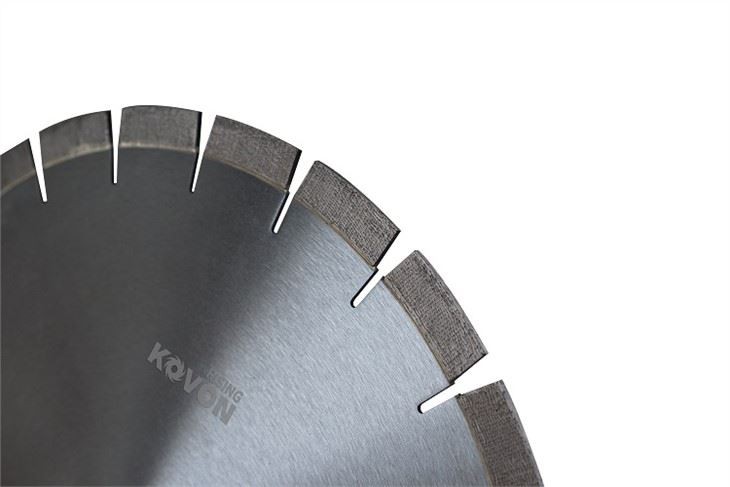

If you're looking for high - quality diamond saw blades for granite cutting, I encourage you to reach out to discuss your specific needs. Our team of experts can help you select the best blade with the optimal grit size for your project. We are committed to providing you with the most suitable products to ensure successful granite cutting operations.
References
- "Handbook of Stone Cutting and Polishing" by John Smith
- "Advanced Cutting Technologies for Natural Stone" by Emily Johnson
- Industry research reports on diamond saw blade performance in granite cutting