

What Is the Difference Between Diamond Blade and Carbide Blade?
When it comes to cutting tools, choosing the right blade for your application is essential to ensure efficiency, safety, and the quality of the finished work. Two of the most widely used blades in both construction and industrial applications are diamond blades and carbide blades. While they may appear similar in function-both being designed for cutting hard materials-their construction, performance, and intended uses differ significantly.
In this article, we'll explore the key differences between diamond blades and carbide blades, including their composition, cutting capabilities, durability, cost, and best-use scenarios. Whether you're cutting concrete, asphalt, tile, or wood, understanding these differences will help you select the most appropriate blade for your job.
1. Composition and Construction
Diamond Blade:
Despite what the name might imply, diamond blades are not made entirely of diamonds. Instead, they consist of a steel core with a rim or segments impregnated with synthetic diamond crystals. These diamonds are bonded to the rim using metal powders and are exposed during cutting to grind through materials.
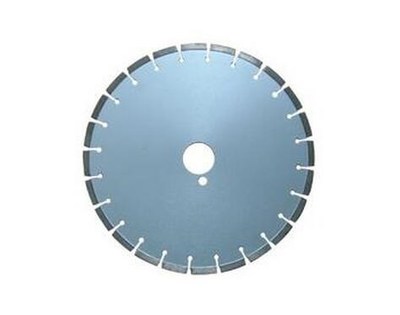
The cutting process is actually a grinding action rather than a slicing one. The embedded diamonds wear down gradually, and new ones are exposed to maintain cutting efficiency.
There are several types of diamond blades:
Continuous rim – for smooth cuts in tile and porcelain.
Segmented rim – for dry cutting and faster material removal.
Turbo rim – combining smoothness and speed, used on stone and masonry.
Carbide Blade:
Carbide blades are generally made of high-speed steel (HSS) or steel alloy, and the cutting tips are embedded with tungsten carbide. Tungsten carbide is a dense, hard material formed from carbon and tungsten. These blades cut by chipping away material with sharp teeth.
Carbide blades can be used with different types of saws, including circular saws and table saws, and are often equipped with a large number of teeth depending on the application-ranging from coarse cuts to fine, precise ones.
2. Cutting Method and Performance
Diamond Blade:
Grinding action: Rather than slicing through material, diamond blades grind the surface with the hard diamond particles. This makes them especially effective for abrasive, dense materials like:
Concrete
Asphalt
Granite
Tile
Glass
Brick
Wet vs. Dry cutting: Some diamond blades require water to cool and minimize dust (wet cutting), while others are designed for dry cutting. Using the wrong type of blade in an unsuitable condition can lead to damage or reduced life span.
No teeth: Since diamond blades rely on abrasion rather than a toothed edge, their performance remains smooth and consistent during cutting.
Carbide Blade:
Toothed cutting: Carbide blades use sharp, durable teeth to slice through material. Each tooth removes a small amount of material, producing a cleaner and faster cut in less abrasive substances.
Best for softer materials: Ideal for cutting:
Wood
Plastic
Non-ferrous metals (e.g., aluminum)
Laminate
Composite materials
Smooth finish: With the right tooth configuration, carbide blades can provide a very smooth finish, especially in woodworking applications.
3. Durability and Wear
Diamond Blade:
Extremely durable: Due to the hardness of diamonds, these blades tend to last longer when used on the appropriate materials.
Segment wear: As the outer segments wear, new diamond crystals are revealed, extending the usable life of the blade.
Material match matters: Using a diamond blade on the wrong material (e.g., wood or metal) can lead to overheating, segment loss, or warping.
Carbide Blade:
Good wear resistance: Carbide blades are very durable in cutting softer, less abrasive materials.
Tooth damage: The carbide tips can chip or wear if used on materials that are too hard or abrasive, such as concrete or ceramic tile.
Easier to resharpen: Carbide-tipped blades can often be resharpened, extending their life if properly maintained.
4. Cutting Speed and Efficiency
Diamond Blade:
Efficient on hard surfaces: Designed for high-speed cutting of tough, mineral-based materials.
Slower on soft materials: These blades are not optimized for soft or fibrous materials like wood and may bog down or burn through them.
Consistency: Diamond blades tend to provide consistent cutting over time until the diamonds are worn away.
Carbide Blade:
Fast on wood and metals: When cutting through wood, plastics, or metals, carbide blades generally cut faster and more smoothly.
Reduced efficiency on stone or concrete: The blade may dull quickly or fail if used on materials it's not suited for.

5. Cost Consideration
Diamond Blade:
Higher initial cost: Diamond blades tend to be more expensive than carbide blades upfront.
Better long-term value for specific tasks: Due to their longer life span and ability to handle very hard materials, they offer better value in applications like masonry and tile cutting.
Carbide Blade:
Lower cost: Carbide-tipped blades are usually more affordable and are widely available.
Cost-effective for general use: Ideal for homeowners, woodworkers, and metal fabricators who need a balance between cost and cutting quality.
6. Applications and Industries
Diamond Blade – Common Applications:
Construction: Cutting concrete slabs, rebar-reinforced walls, bricks, and asphalt roads.
Tile & Stone work: Cutting ceramic tile, marble, granite, and glass.
Demolition: Removing stone or masonry without causing excessive damage.
Carbide Blade – Common Applications:
Carpentry: Cutting dimensional lumber, plywood, MDF, and particle board.
Metalworking: Non-ferrous metal fabrication and aluminum cutting.
DIY/Home Improvement: Versatile tool for household renovation and remodeling.
7. Safety and Handling
Diamond Blade:
Requires high RPMs to function efficiently, which may lead to overheating or breakage if not used correctly.
Dust control: Especially with dry cutting, diamond blades create fine dust; wearing PPE and using proper ventilation is critical.
Avoid lateral pressure: These blades should only be used in straight-line cuts to avoid segment loss.
Carbide Blade:
Risk of kickback: Especially with wood, improper feed rate or blade type can cause kickback.
Tooth breakage: Care is needed to avoid damaging the teeth or using the blade on inappropriate materials.
Sharp edges: The tips can remain dangerously sharp even after use-always handle with care.


