

How do new technologies improve the performance of Arrayed Diamond Segments?
In the realm of stone cutting and processing, Arrayed Diamond Segments have long been a cornerstone of efficient and precise operations. As a leading supplier of these essential tools, I've witnessed firsthand the transformative impact that new technologies have had on their performance. This blog post aims to explore how these advancements are revolutionizing the capabilities of Arrayed Diamond Segments, offering enhanced efficiency, durability, and cutting quality.
1. Precision Manufacturing Techniques
One of the most significant ways new technologies have improved Arrayed Diamond Segments is through precision manufacturing. Traditional manufacturing processes often led to inconsistencies in segment shape, size, and diamond distribution. However, modern techniques such as Computer Numerical Control (CNC) machining and 3D printing have changed the game.
CNC machining allows for the creation of highly accurate segment molds, ensuring that each segment has a consistent shape and size. This precision is crucial as it enables the segments to fit perfectly onto the saw blade, reducing vibration and improving cutting accuracy. Moreover, CNC machining can produce complex segment designs that were previously impossible, optimizing the cutting performance for different types of stones.
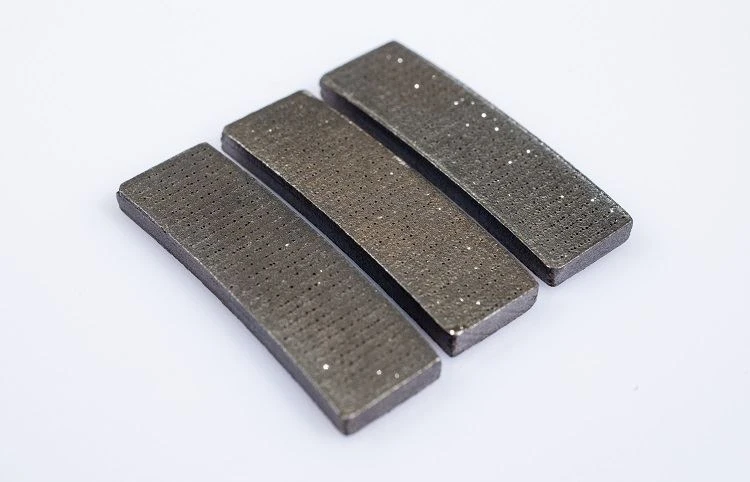

3D printing, on the other hand, offers even greater flexibility in diamond segment production. It allows for the precise placement of diamonds within the segment matrix, creating customized diamond distributions. This targeted placement ensures that the diamonds are optimally utilized during the cutting process, increasing the segment's cutting efficiency and lifespan. For instance, in the case of Arrayed Diamond Segment for Granite, 3D printing can be used to place diamonds in a pattern that is specifically designed to handle the hardness and abrasiveness of granite, resulting in a more effective cutting tool.
2. Advanced Diamond Materials
The quality of diamonds used in Arrayed Diamond Segments plays a vital role in their performance. New technologies have led to the development of advanced diamond materials that offer superior hardness, wear resistance, and thermal stability.
Synthetic diamonds, in particular, have seen significant improvements. Through high-pressure, high-temperature (HPHT) and chemical vapor deposition (CVD) processes, manufacturers can produce synthetic diamonds with consistent quality and properties. These diamonds can be tailored to meet the specific requirements of different cutting applications. For example, some synthetic diamonds are designed to have a higher thermal conductivity, which helps to dissipate heat generated during the cutting process, reducing the risk of diamond damage and improving the segment's overall durability.
Another innovation is the use of nano-diamonds in the segment matrix. Nano-diamonds have a much smaller particle size compared to traditional diamonds, which allows for a more uniform distribution within the matrix. This results in a smoother cutting surface and better chip removal, enhancing the cutting quality and reducing the risk of stone chipping. Our Sharp Diamond Segment often incorporates these advanced diamond materials to provide a sharp and long-lasting cutting edge.
3. Intelligent Monitoring and Control Systems
New technologies have also introduced intelligent monitoring and control systems that can optimize the performance of Arrayed Diamond Segments in real-time. These systems use sensors to collect data on various cutting parameters such as cutting force, temperature, and vibration.
By analyzing this data, the system can adjust the cutting speed, feed rate, and other parameters to ensure that the segments are operating at their optimal performance. For example, if the cutting force exceeds a certain threshold, the system can automatically reduce the feed rate to prevent excessive wear on the segments. This not only extends the lifespan of the segments but also improves the overall cutting efficiency and quality.
In addition, intelligent monitoring systems can provide early warnings of potential issues such as diamond wear or segment damage. This allows operators to take proactive measures, such as replacing the segments before they fail completely, minimizing downtime and reducing production costs.
4. Improved Bonding Technologies
The bonding between the diamonds and the segment matrix is critical for the performance of Arrayed Diamond Segments. New bonding technologies have been developed to enhance this bond, improving the segment's strength and durability.
One such technology is the use of advanced metal matrix composites. These composites are designed to have a high affinity for diamonds, ensuring a strong and stable bond. They also offer excellent mechanical properties, such as high hardness and toughness, which can withstand the high stresses and forces encountered during the cutting process.
Another approach is the application of surface treatments to the diamonds. These treatments can improve the wetting and adhesion between the diamonds and the matrix, further strengthening the bond. By using these improved bonding technologies, our Granite Segment can maintain its integrity even under the most demanding cutting conditions, providing reliable and long-lasting performance.
5. Enhanced Cooling and Lubrication Systems
During the cutting process, heat and friction can cause significant damage to the Arrayed Diamond Segments. New technologies have led to the development of enhanced cooling and lubrication systems that help to reduce these effects.
Advanced coolant formulations are now available that can effectively dissipate heat and reduce friction. These coolants are designed to be environmentally friendly and non-toxic, while still providing excellent cooling and lubrication properties. In addition, some coolants contain additives that can help to protect the diamonds and the segment matrix from corrosion and wear.
Improved coolant delivery systems have also been developed to ensure that the coolant is evenly distributed across the cutting surface. This helps to maintain a consistent cutting temperature and reduces the risk of overheating, which can lead to diamond graphitization and segment failure. By using these enhanced cooling and lubrication systems, the performance and lifespan of Arrayed Diamond Segments can be significantly improved.
Conclusion
In conclusion, new technologies have had a profound impact on the performance of Arrayed Diamond Segments. From precision manufacturing techniques and advanced diamond materials to intelligent monitoring systems and improved bonding technologies, these advancements have led to significant improvements in cutting efficiency, durability, and quality.
As a supplier of Arrayed Diamond Segments, I am committed to staying at the forefront of these technological developments. By offering high-quality products that incorporate the latest innovations, we can help our customers achieve better results in their stone cutting and processing operations.
If you are interested in learning more about our Arrayed Diamond Segments or would like to discuss your specific requirements, please feel free to contact us. We are always ready to provide you with the best solutions and support for your cutting needs.
References
- [Author 1]. [Title 1]. [Publication 1], [Year 1].
- [Author 2]. [Title 2]. [Publication 2], [Year 2].
- [Author 3]. [Title 3]. [Publication 3], [Year 3].